Children Learn What They Live: When a Child’s World Doesn’t Feel Safe
This blog has been updated from the original Oct. 20, 2024 post.
Children learn from what they live—especially when what they are living feels unsafe.
They may not have the words to describe what’s happening around them, but they absorb it. The tension, the unpredictability, the fear, the silence.
Over time, these experiences begin to shape how they see themselves, others, and the world.
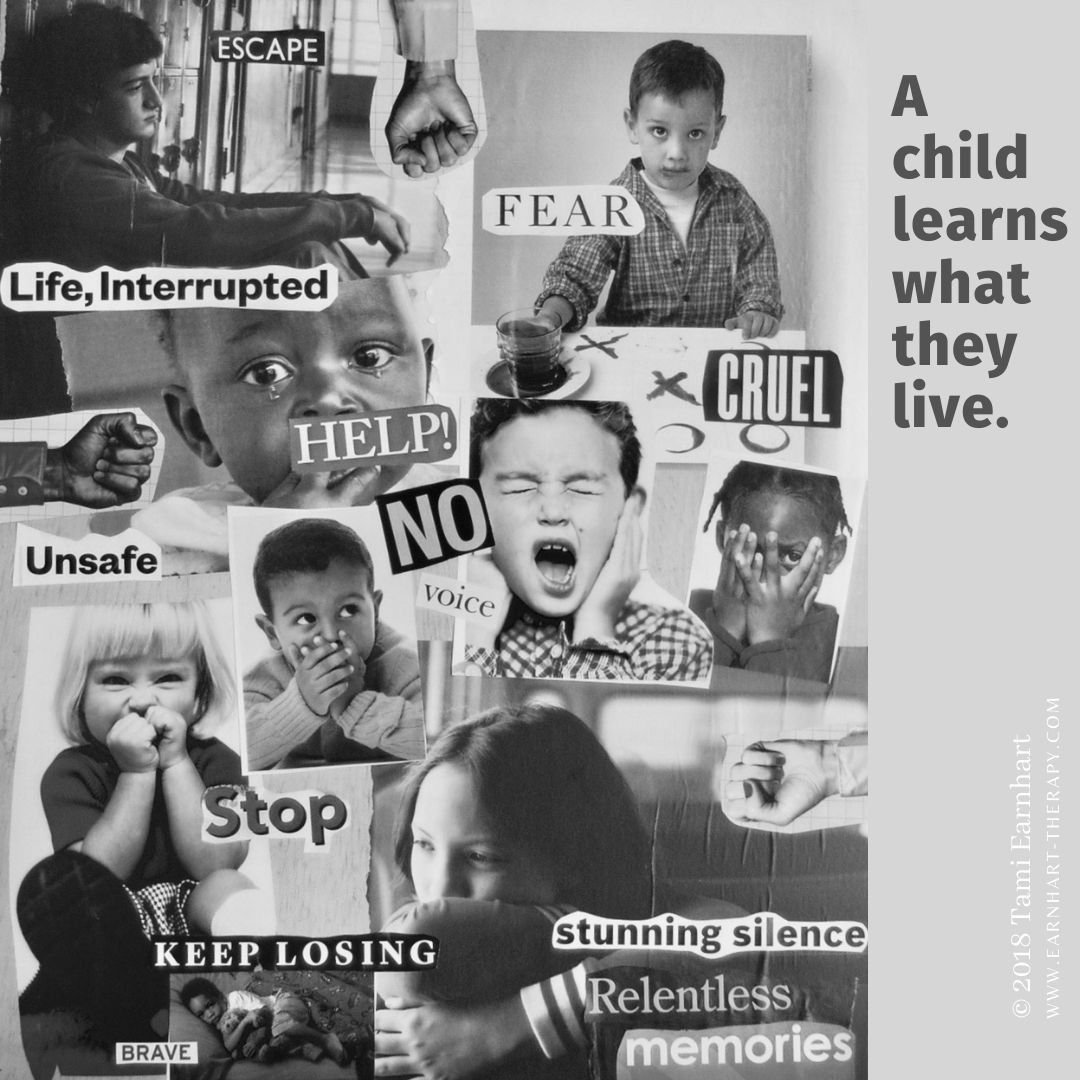
Context of this Artwork
This collage was created in response to my work as a Marriage and Family Therapist, providing art therapy in San Diego.
Earlier in my career, I worked in a community mental health setting, often with children exposed to unsafe or overwhelming environments.
The images and words in this piece reflect emotional states that are often present, but not always spoken:
fear
silence
confusion
overwhelm
the need to hide
What Children Learn
Children learn what they live.
When environments feel unsafe or unpredictable, children often learn that it is safer to stay quiet—to hide what they think, feel, and need.
These adaptations can look like:
becoming hyper-aware of others
withdrawing or shutting down
struggling to express emotions
trying to stay “good” or invisible
These are not flaws. They are ways of coping.
The Impact Over Time
I have also worked with adults who grew up in homes where violence was present.
Many found themselves caught in an intergenerational cycle—living patterns they never consciously chose, but had learned early on.
They were, in many ways, living what they learned.
Why Art Therapy Matters
When words feel unavailable—or unsafe—art can offer another way.
Through art, children (and adults) can:
express what feels too overwhelming to say
externalize internal experiences
begin to make sense of what they’ve lived
Art doesn’t require the “right” words. It creates space for expression to come first.
A Gentle Reflection
Children don’t choose the environments they grow up in—but they do carry those experiences with them. With support, safety, and space for expression, those experiences can begin to be understood in new ways.
In my private practice as a therapist in San Marcos, CA, I work with children, and adults navigating anxiety, and the lasting impact of early experiences.
Art therapy can be a powerful way to support expression, especially for those who have learned to stay quiet.
If you’d like to learn more, you can explore my art therapy services or reach out for a consultation.
If you or someone you know is experiencing intimate partner violence, support is available through the National Domestic Violence Hotline at 800-799-7233 or thehotline.org.